 Courtesy of David Kim's Soho Dermatology officeSave this storySave this story
“Are you turning me into a robot?” I ask David Kim, MD, a board-certified dermatologist in New York City, as he places an oversized adhesive bandage connected to a cord on my lower back…and plugs it in. No, this isn’t The Jetsons, and no, I’m not in an AI lab.
It’s the Wednesday before Thanksgiving, and instead of heading to the airport for a flight to see my family for the holiday, I’m at Dr. Kim’s office getting ready for my first XERF treatment. (Don’t worry, I totally went home for Christmas.)
XERF is a radio-frequency (RF) skin-tightening device by Cynosure Lutronic, which also makes the Genesis and PicoSure Pro brightening lasers, as well as Clarity II for hair removal. XERF made its debut in South Korea in 2024, but it wasn’t FDA-cleared for use in the US until last August. Unlike drugs, devices don’t need the FDA’s approval, which requires proof of both minimal risk and meaningful benefit; but they do need its clearance, which requires proof of only minimal risk or similarity to an existing device.
If you’ve ever engaged with (or even thought of) in-office aesthetics content, you’ve probably seen XERF on your feed since the device arrived in the US. It already has celebrity fans, such as Kim Kardashian. (Incidentally, she also helped push skin-tightening devices Morpheus and Sofwave to prominence with her social media thumbs-up, which some believe was not an entirely organic endorsement.)
All that said, as a 35-year-old beauty editor who has tried more than a few in-office skin treatments over the past decade in an effort to flatten fine lines and tighten my jawline, I had no concerns about trying this new option—with a board-certified dermatologist, of course. They had me at “Korean” and “no downtime.” Here’s everything you need to know about XERF, including its benefits, possible side effects, pricing, and more.
What is XERF?
XERF, which is a shortened version of eXperience Exponential RF, is a monopolar radio-frequency device designed for non-invasive skin-tightening and rejuvenation. “In monopolar systems, energy travels from a single treatment tip into the deeper layers of the skin and exits through a grounding pad placed elsewhere on the body,” explains Jenna Queller, MD, a board-certified dermatologist based in Boca Raton, Florida. “This allows for deeper penetration of heat compared to other [systems].”
She continues, “What makes XERF unique and, honestly, quite interesting from a science standpoint, is that it uses dual frequencies—6.78 MHz and 2 MHz—to deliver energy at multiple depths of the skin simultaneously.” Most other tightening devices use one frequency and can thereby work on only one layer of skin at a time. Dr. Queller has not yet invested in XERF for her practice, but she has reviewed its clinical studies.
“It’s a refinement of existing radio-frequency technology in which they're delivering radio-frequency energy from the surface of the skin using two frequencies intended to heat multiple tissue depths simultaneously,” says Shereene Idriss, MD, a board-certified dermatologist in New York City. In her opinion, though, “this is not exactly a brand-new scientific breakthrough. Radio-frequency energy has been used for many, many years, if not decades at this point.” Like Dr. Queller, she has not brought the machine into her office yet: “I always hesitate to treat my patients with a device that hasn’t been around long,” she says. “I generally wait at least six months to a year to make sure the results are consistent, and there are no unexpected risks.”
But let’s get back to XERF, specifically, in which the dual frequencies have two different jobs: tightening (targeting fine lines) and lifting (triggering collagen remodeling). As Dr. Kim explains it, “at 6.87 MHz, [the RF energy] goes very superficially, so it helps tighten the skin, but 2 MHz goes down deeper” to the subcutaneous layer where collagen is produced. The RF energy is delivered into the skin via an oversized flat tip that produces heat while also emitting cooling gas for comfort—so there’s no numbing, needles, or pain. That last part is particularly impressive because I’ve tried RF with microneedling in the past—like the Cutera Secret RF—and it left me in tears. XERF didn’t. (More on that later.)
After the energy enters the skin, it doesn’t stick around. Remember that human battery pack? As Dr. Kim explained, it’s needed to help release energy from the device.
“For monopolar devices, the handpiece releases the radio-frequency [energy], and it travels through your body and comes out through the grounding pad. You won’t feel it,” says Dr. Kim. He’s right: I didn’t feel it, but just knowing I was plugged in, so to speak, was…weird.
Who is XERF for?
“XERF is for any skin type or skin tone,” says Dr. Kim, who has had the device in his office, Soho Dermatology, since November. Cynosure Lutronic’s clinical studies on XERF also found that it works on a wide range of complexions. (We've asked the manufacturer to share more details on the methodology of these studies and will update this story accordingly.) “Even people with melasma, theoretically, can do it because the [device] tip is so cool.” (People with melasma are often advised to steer clear of RF devices, as heat can be a trigger; I have melasma and didn’t experience any sort of discoloration or brown spots during or after my treatment.) I’ve been getting neuromodulators injected into the top half of my face since I was 27, and hyaluronic acid filler in the bottom half for the last two years. I’ve gotten many laser treatments and have experienced the discomfort of both microneedling and microneedling with RF. So I don’t have much skin laxity or jowling, but I’m also not a teenager anymore—and that makes me a perfect candidate for XERF. According to Dr. Kim and Dr. Queller, the ideal XERF patient is someone with a bit of skin laxity, mild jowling, or both.
XERF, and other RF treatments, may also be an effective means to treat loose skin as a result of weight loss, says Dr. Idriss, since they work by heating tissue and stimulating collagen remodeling. But “it really does depend heavily on the patient's skin quality and the degree of their weight loss, because GLP-1 users develop skin laxity due to rapid fat loss,” she explains. “That rapid change can also mean decreased collagen and elastin support, thinner and weaker skin quality, and loss of underlying facial pads.”
Furthermore, after those skin changes happen, non-invasive tightening treatments (whether XERF or other RF devices) probably won’t be effective enough to make a meaningful impact, says Dr. Queller. In these cases, the RF would help refine skin texture, but wouldn’t replace lost structure. It’s likely, she says, that these patients would benefit more from a combination approach using biostimulatory fillers (Sculptra or Radiesse) and/or hyaluronic acid fillers (Restylane or Juvéderm) alongside the RF.
Who is XERF not for?
“I would avoid it or use caution in patients with significant skin laxity, like visible skin draping or deeper folds, as they may ultimately benefit more from surgical intervention,” says Dr. Queller. “Patients with unrealistic expectations should be counseled carefully—this treatment is not a substitute for a facelift.”
If a patient doesn’t have enough tissue and their face is on the bonier side, XERF may not be for them either. Without a healthy amount of tissue (which Dr. Kim says I have plenty of, thanks to my Eastern European ancestors), a potential side effect could be too much heat that leads to skin burning.
Also: If you have an implanted electronic medical device of any kind, Cynosure and the experts I spoke with all agree that XERF—and all energy-emitting devices—should be avoided.
What can you expect during a XERF treatment?
Unlike most other radio-frequency devices (with the exception of Thermage), XERF doesn’t require numbing. So when I arrived at my appointment, I wasn’t rushed into the exam room for a hefty slathering of numbing cream, then asked to wait 30 minutes before seeing the doctor. Rather, I was brought into the room, plugged in, and given a headband to hold my hair back. Dr. Kim then applied a thick coating of conductor gel (a.k.a. ultrasound jelly), lowered my chair, and… that’s it.
He turned on the machine (on the lowest setting because my laxity is mild) and briefly prepped me on what to expect. “You'll feel like you’re getting a warm stone massage, but you're not going to feel super hot,” he reassured me, adding that if I did feel uncomfortable, he’d adjust the settings or take a quick break in between pulses. All 600 of them.
“You want to do at least 600 pulses total for the face,” Dr. Kim says. “I typically do anywhere between 600 to 650, but if someone has heavier jowls and a lot of skin laxity, then I'll do a little more.” When he includes the neck in the treatment, it’s usually about 900 pulses total.
Courtesy of subject
With 600 pulses in my immediate future, I took a deep breath, then gave Dr. Kim the go-ahead. Over the next hour or so (the treatment usually takes 45 minutes to an hour), we chit-chatted about anything and everything (the weather, my annual road trips to Florida, local politics) to keep me from fixating on the slight discomfort I was feeling from the heat.
If Dr. Kim wasn't such a great dermatologist, I’d suggest he take up a career in talk therapy, because he was very good at keeping me in conversation while he subtly amped up the intensity every so often (with my permission each time). It would get a little spicy, and then my skin would quickly get used to it. He upped the intensity a few times during the treatment, and on a pain scale of one to 10, I probably reached a three or four, max, and it quickly dissipated. It’s worth noting, though, that I am a very sensitive-skinned person and have a low tolerance for pain, so my three or four might be someone else’s one or two.
Once Dr. Kim reached his 600-ish pulse (250 to 275 on each side of the face, then 100 for the forehead), he wiped away the conductor gel to reveal my skin’s new-but-temporary pink tint and the immediate tightness around my jawline and upper neck. Says Dr. Queller, “Some patients notice an initial tightening effect shortly after treatment due to collagen contraction. This is when the collagen fibers in the skin—which are structured like tightly coiled springs—contract and tighten immediately when exposed to controlled heat and radio-frequency energy.”
While this initial effect is fleeting, the real results start to show in a couple of weeks to months, during which the skin begins to rebuild new collagen and remodel already existing elastin.
What is aftercare like for a XERF treatment?
Patients are told they may experience mild redness, warmth, or slight swelling, which resolves within a few hours to a day after treatment. In my case, after a quick post-treatment sheet-mask session in Dr. Kim’s office (it contained calming ingredients like hyaluronic acid and cica), I snapped a quick (and disturbing-looking) selfie, made my appointment for a second session (more on why in a moment), and headed out into the pre-holiday night. By the time I made it outside, my face no longer felt warm, the redness was already dissipating, and I had zero swelling.
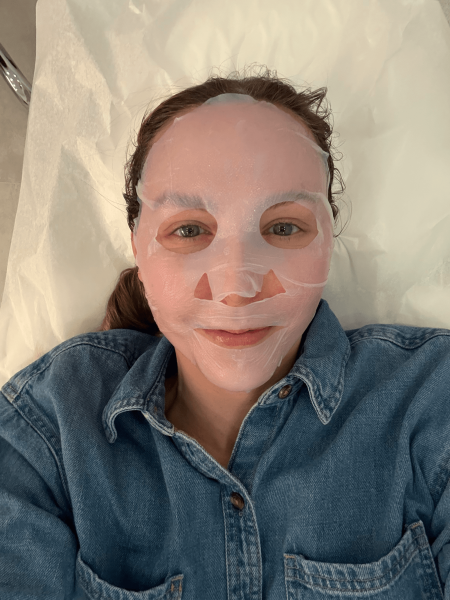
Beauty director Sarah Kinonen wearing a sheet mask immediately after her XERF treatment.
I went home, took a warm-ish shower (no excessive heat post-treatment), and applied an eye cream, moisturizer, and Vaseline-like occlusive balm, as directed by Dr. Kim. (My sensitive skin likes Prequel’s Skin Utility Ointment because it’s lightweight, layers well, and doesn’t leave greasy marks on my silk pillowcases.) For the next three days, I avoided my usual prescription tretinoin in case it could be irritating, and I slathered on even more sunscreen than usual.
How often should you get XERF treatments?
Cynosure recommends doing two sessions at least one month apart. The company’s studies have shown that this protocol most effectively triggered collagen remodeling and improved skin firmness at 30 days after the second treatment. Dr. Kim, however, likes to take more time in between each appointment: “I think that’s too close to each other [for the collagen to have time to rebuild],” he explains, “so I'm spacing out sessions three to six months apart. And I never do more than two treatments in a year.”
Age, of course, also plays a big factor in a treatment plan. “The younger you are, it's going to last a little bit longer,” says Dr. Kim. Results typically last three to four months after the first treatment, and then about eight to 10 months after the second session.
How is XERF different from other radio-frequency treatments on the market?
There are now at least five skin-tightening RF treatments available in the US, including Thermage, which also uses monopolar RF; Exilis, which combines RF with ultrasound; and Morpheus8 and Secret Cutera, which combine RF with microneedling.
“It’s like Thermage but better,” says Dr. Kim. Thermage uses one wavelength, one frequency, and XERF, as we explained earlier, uses two: 6.87 MHz goes very superficially and helps firm the skin; and 2 MHz goes deeper, giving you a lift and the tightening. But “XERF doesn't go as deep as Ultherapy,” says Dr. Kim. For many of his patients, though, the pain of that tightening ultrasound treatment isn’t worth it—even with numbing cream.
But if you don’t find it too uncomfortable, Ultherapy is worth considering as an alternative to XERF, says Dr. Idriss, who uses Ultherapy in her practice. “Ultherapy utilizes ultrasound energy for tissue remodeling, hitting several different layers of your skin as you treat and requiring one treatment overall,” she explains. “So it's usually a faster, more efficient approach, plus it also has a longer track record in terms of years on market and being used.”
Other than XERF and an RF microneedling treatment, I’ve never tried any of the above devices, so I can’t speak personally about their effectiveness and results. I will say, though, that they’ve been staples in the skin-care device space for years. It will be interesting to see how XERF performs against them in the coming years. “There is no head-to-head study directly comparing XERF to RF devices such as Thermage or Everesse,” says Dr. Kim, “but XERF is the only RF device in the world to use multifrequency.”
Of course, new isn’t necessarily better. “When consumers start hearing about new devices on the market, instead of jumping to, ‘Should I get this?’ they should first ask themselves, ‘Why am I seeing so much about this now?’” says Dr. Idriss. “Because the visibility that companies create [through marketing] also creates the perception that a device is revolutionary, even when or if the underlying technology is just an iteration of something that has already existed. It doesn't always correlate with clinical superiority.”
She continues, “This has nothing to do with XERF in particular, but it's an overall awareness that I want people to have: When they’re hearing about brand-new devices, it often correlates with marketing budgets.” (See: Kim Kardashian.)
Can you combine XERF with other treatments?
The short answer? Yes. “I often think of it as a ‘scaffolding’ treatment that improves structural support and skin firmness,” says Dr. Queller. “It pairs well with neuromodulators to address dynamic wrinkles, fillers or biostimulatory injectables to restore volume, and lasers or chemical peels to improve pigmentation and texture.”
Dr. Kim says XERF can also be paired with similar RF devices to target different areas of the face. “I offer what we call Xultherapy—XERF plus Ultherapy—in my office,” he says. “Because in a perfect world, if someone has a lot of laxity, you'll do Ultherapy in the jawline and the outer face, and you'll do XERF in the marionette lines and the smile lines, and then directly under the eyes, where you can't go with Ultherapy [because of the size of the device’s tip]. It’s the ultimate collagen-banking treatment.”
Of course, cocktailing treatments is a matter you and your dermatologist should decide on together, so every plan will vary.
How much does XERF cost?
The average cost of a XERF treatment is around $2,000 for a full series of two treatments, according to the parent company behind the device. But the price will vary depending on provider, location, and number of treatments needed. (I was quoted $2,300 in New York City, though my service was performed gratis with the understanding that I’d be writing about my experience.)
My results
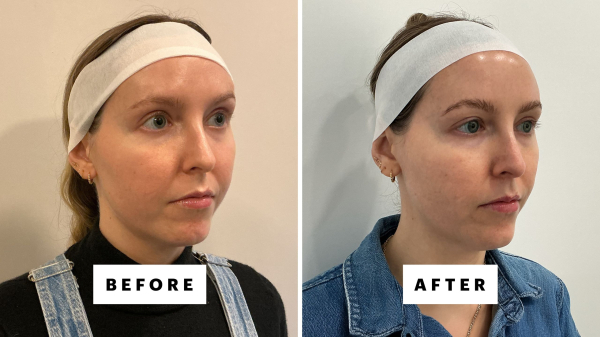
As you can see in the before-and-after images, XERF worked well for me. There’s a clear difference between the photo on the left (taken in November 2025) before my first appointment, and the photo on the right (taken in April 2026) ahead of my second appointment.
On the left, I was a few weeks shy of a Botox appointment (I get neuromodulator injections every three to four months), physically stressed over the state of the world and my husband losing his job, and it showed. My skin’s texture was slightly uneven, I was puffy all over, had a pinkish tint from my rosacea, and was experiencing a bit of laxity. It wasn’t my best look, that’s for sure.
I left my November session with a slightly lifted look. It was like my cheeks were so high and prominent that they made a home in my undereye area—a welcome change! And I got a bit of my confidence back.
Over the next few months, I noticed my face tighten up a little. It was less of the immediate lift I saw after the treatment, which stuck around for a few days, and more of an overall smoother, firmer look and feel. Even Melissa Kanchanapoomi Levin, MD, a New York City-based board-certified dermatologist I’ve been going to for years for neuromodulators and filler, said my skin looked great. (A true compliment coming from a derm!) She said she immediately noticed the tighter look and feel that I had—even before she injected me with my every-three-months dose of Botox and a touch of jawline filler.

Beauty director Sarah Kinonen one day after her second XERF treatment.
These results—which were much more immediate and less jarring than my Secret RF results (think bright red skin for days with dry, flaky side effects)—will last only a few months, not forever. So I won’t fall in love with them too much—unless I keep up the sessions after my second treatment, which I had in early April. Says Dr. Queller, “Like most energy-based treatments, XERF is best viewed as part of a long-term skin-maintenance plan rather than a one-time solution.”
At around $2,000 for a two-session course, I cannot fathom trying to financially keep up with XERF treatments on a regular basis, though I am very pleased with my results. But if the lottery thing comes through, well…